
Have you ever noticed dark patches suddenly appearing on your skin? This condition, known as hyperpigmentation, can make you feel less confident. Although harmless, these patches often affect your appearance and leave you wondering what causes them.
Hyperpigmentation occurs when the production of melanin, the pigment that gives skin its colour, increases excessively. As a result, certain areas of the skin look darker than the surrounding skin. Sun exposure is one of the main factors that triggers this condition. Ultraviolet (UV) radiation can stimulate melanin production, especially if the skin is not well protected.
Fortunately, there are various ways to deal with hyperpigmentation, from using skincare products to professional therapies. By understanding the cause, you can take the right steps to keep your skin healthy and beautiful.
Key Points
- Hyperpigmentation occurs because of increased melanin production.
- Sun exposure is the main cause.
- Dark patches are harmless but affect your appearance.
- Skincare products and professional therapies can help.
- Protecting the skin from UV rays is very important.
Understanding what hyperpigmentation is
Have you ever seen dark patches appearing on your face or body? This condition is known as hyperpigmentation, in which certain areas of the skin look darker than the surrounding skin. It happens because the production of melanin, the substance that gives skin its colour, increases excessively.
Definition and the Melanin Production Process
Melanin is produced by cells called melanocytes. This process is influenced by genetic and external factors, such as sun exposure. When the skin is exposed to UV rays, melanocytes produce more melanin as a form of natural protection. However, excessive production can cause it to build up and form dark patches.
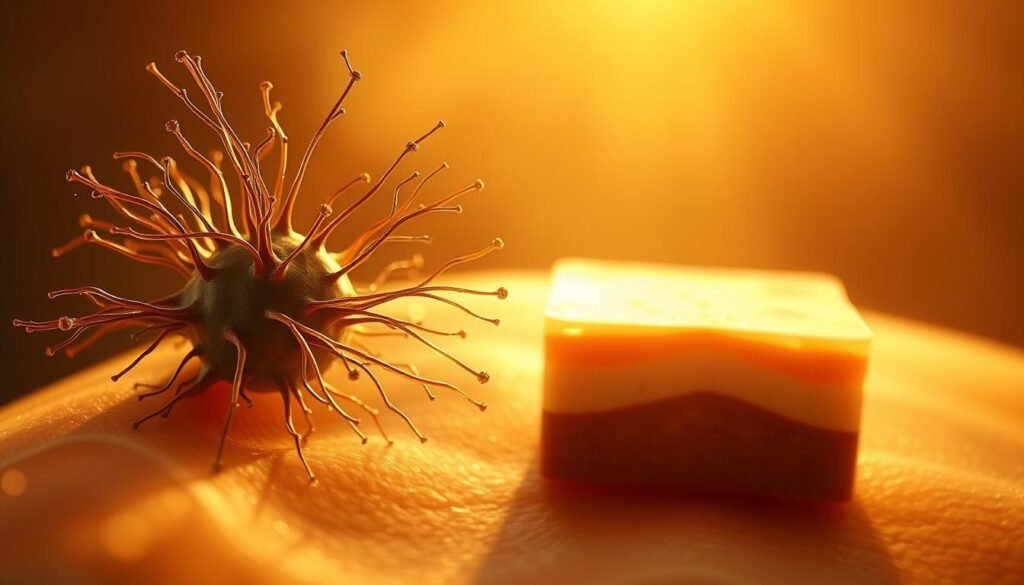
Melanin plays a very important role in determining skin colour. When this process is disrupted, dark spots can appear in areas that are often exposed to the sun, such as the face, neck or hands.
The Impact of Hyperpigmentation on Your Skin’s Appearance
Dark patches on the skin don’t just affect your appearance, they also affect your confidence. Uneven skin tone often makes people feel uncomfortable, especially if the spots appear in visible areas such as the face.
Although harmless, hyperpigmentation can be a sign that your skin needs more care. By understanding this process, you can take the right steps to keep your skin healthy and beautiful.
Causes and Types of Hyperpigmentation
Dark patches on the skin can be triggered by various factors. This condition, known as hyperpigmentation, occurs when melanin production increases excessively. External and internal factors can affect this process, so it is important to understand the causes and types.
Causes: Sun Exposure, Inflammation, Hormones and Injury
Sun exposure is one of the main causes. UV rays stimulate melanin production, especially if the skin is not protected. Inflammation also plays a big role, such as acne or burns, which can leave dark patches after they heal.
Hormonal changes, especially in women, can trigger melasma. This condition often occurs during pregnancy or while using birth control pills. Skin injuries, such as scratches or surgical scars, can also cause discolouration.
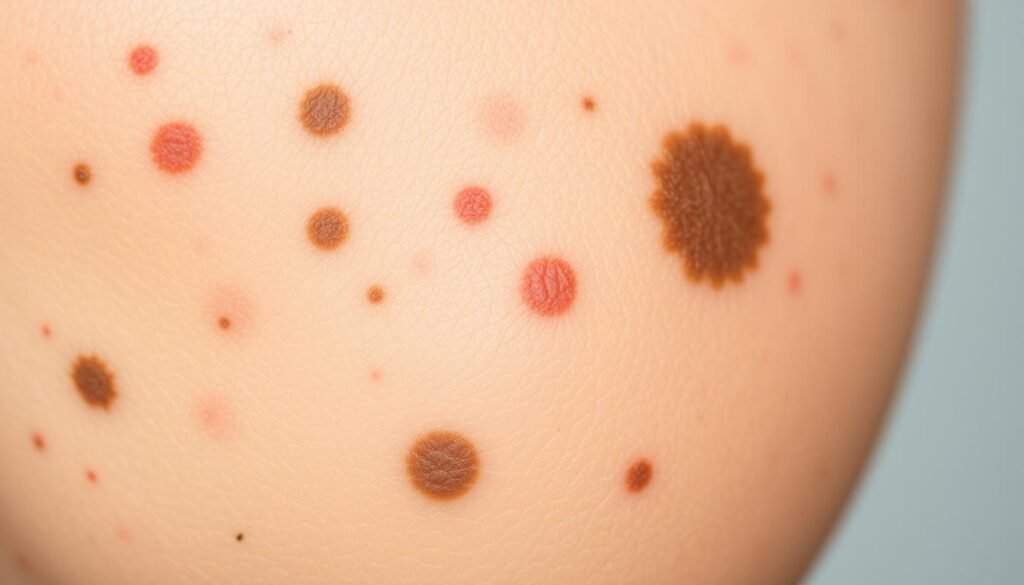
Types of Hyperpigmentation: Melasma, Lentigo and Post-Inflammatory
Melasma often appears on the face, especially the cheeks, forehead and upper lip. This condition is influenced by hormones and sun exposure. Lentigo, or sunspots, usually occur in areas that are often exposed to UV rays, such as the hands and face.
Post-inflammatory hyperpigmentation (PIH) appears after skin inflammation, such as acne or eczema. These patches can be brown or blackish and take time to fade.
“Protecting the skin from the sun is an important step in preventing hyperpigmentation.”
By understanding the causes and types, you can take the right steps to care for your skin. Use suitable products and consult an expert if needed.
Symptoms, Diagnosis and When to See a Doctor
Are you bothered by dark patches appearing on your skin? Although this condition is generally harmless, it can be a sign that your skin needs more attention. Let’s discuss the symptoms, diagnosis and when you need to consult a doctor.
Signs of Hyperpigmentation on the Skin
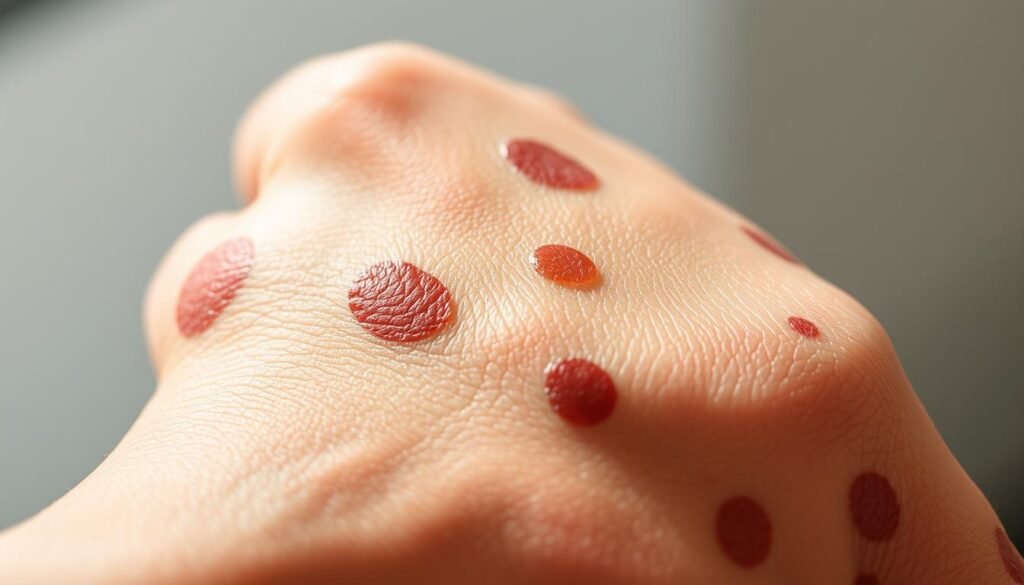
The main symptom of hyperpigmentation is dark patches appearing on the skin. These patches can be black, brown or grey, and often appear in areas frequently exposed to the sun, such as the face, neck or hands.
Although they are not painful, these patches can affect your appearance. If they are accompanied by redness, a burning sensation or itching, see a doctor straight away to get the right treatment.
The Diagnosis Process and Supporting Tests
Diagnosing hyperpigmentation usually starts with questions and a physical examination. The doctor will ask about your medical history and factors that may trigger this condition, such as sun exposure or skin inflammation.
To confirm the diagnosis, some supporting tests may be needed. Here are the methods commonly used:
| Examination Method | Description |
|---|---|
| Wood’s Lamp | Uses ultraviolet light to see changes in skin colour in detail. |
| Blood Test | Checks whether there is an underlying medical condition. |
| Skin Biopsy | Takes a skin sample for further analysis. |
If the dark patches don’t fade or are accompanied by other symptoms, consult a doctor straight away. Early treatment can prevent the condition from getting worse and affecting your appearance.
Want advice for your own skin? Book a free consultation or ask us on WhatsApp.
Treatment and Care Options for Dealing with Hyperpigmentation
Dark patches on the skin can be treated in various ways, from medication to professional therapies. It is important to choose a method that suits your skin condition. With the right care, these patches can fade and your skin can look bright again.
Topical Medication and Professional Therapies: Laser, Chemical Peeling and Retinoids
Several topical medications such as hydroquinone, retinoids and azelaic acid have been shown to be effective in brightening the skin. Hydroquinone works by reducing melanin production, while retinoids help speed up skin cell regeneration.
For faster results, professional therapies such as laser and chemical peeling can be an option. Lasers target the skin layers that contain excess melanin, while chemical peeling exfoliates the outermost layer of skin to reveal brighter skin.
Consult a dermatologist to determine the method that best suits your condition. These therapies must be carried out by experts to avoid side effects such as irritation or redness.
Daily Care Tips: Using Sunscreen and Nourishing Your Skin
Using sunscreen with SPF 30 or higher is very important to prevent sun exposure that can make the condition worse. Apply sunscreen every day, even when the weather is cloudy.
Nourishing your skin is just as important. Use products containing vitamins C and E and other active ingredients to brighten the skin. Regularly cleansing and moisturising your skin also helps keep it healthy overall.
- Use sunscreen every day to protect your skin from UV rays.
- Choose skincare products that contain vitamins C and E.
- Cleanse and moisturise your skin regularly.
With a combination of daily care and professional therapies, dark patches on the skin can be reduced significantly. Consult a doctor to get the right recommendations.
Conclusion
Understanding the causes of dark patches on the skin and how to deal with them is an important step in caring for your appearance. This condition, which is often triggered by sun exposure or hormonal changes, can be dealt with through the right care.
Recognise the symptoms and types early for effective treatment. Consult a doctor to determine the treatment method that suits your skin condition. A combination of daily skincare products and professional therapies can help brighten the skin significantly.
Don’t forget, using sunscreen and skin nutrients such as vitamin C is very important to prevent dark spots from coming back. With regular care, your skin will look brighter and more even.
Start caring for your skin today. These small steps can change your appearance and boost your confidence.
FAQ
What is meant by hyperpigmentation?
Hyperpigmentation is a skin condition in which certain areas become darker because of excessive melanin production. This can happen because of sun exposure, inflammation or hormonal changes.
What are the common types of hyperpigmentation?
There are several types, such as melasma, which often occurs during pregnancy, lentigo caused by sun exposure, and post-inflammatory hyperpigmentation, which appears after wounds or acne.
How can you prevent hyperpigmentation?
You can prevent it by using sunscreen regularly, avoiding excessive sun exposure and caring for your skin with brightening ingredients such as vitamin C.
When should I consult a doctor?
If the change in skin colour affects your appearance or does not improve with home care, consult a doctor straight away to get the right treatment.
What treatment options are there for hyperpigmentation?
Treatment can include topical medication such as retinoids, professional therapies such as laser and chemical peeling, and daily care with sunscreen and active ingredients.
Can hyperpigmentation disappear completely?
With the right treatment, this condition can fade or disappear. However, the results depend on the type, the cause and how consistent your care is.