
Have you ever felt less confident because of dark patches appearing on your face? This condition, known as melasma, often makes many people feel uncomfortable with their appearance. These patches usually appear because of sun exposure or hormonal changes, especially in women.
Melasma is not just an aesthetic issue, it can also affect your self-confidence. Many people look for solutions to deal with this condition so their skin looks brighter and healthier. However, before looking for solutions, it is important to understand what is actually happening to your skin.
This article will help you understand melasma in more depth, the factors that trigger it, and the first steps you can take to care for your skin. With accurate, easy-to-understand information, you will feel better prepared to face this condition.
Key Points
- Melasma is a skin condition characterised by dark patches, especially on the face.
- Sun exposure and hormonal changes are the main triggers of melasma.
- This condition often affects a person’s self-confidence.
- Using a high-SPF sunscreen is highly recommended to prevent melasma.
- The right skincare can help reduce dark patches.
Understanding Melasma: Definition, Causes and Impact
Brown or grey patches appearing on the face are often linked to melasma. This condition occurs when skin cells produce too much melanin, the pigment that gives skin its colour. These patches usually appear on areas of the face such as the cheeks, forehead and chin, although they can also appear on the neck or arms.
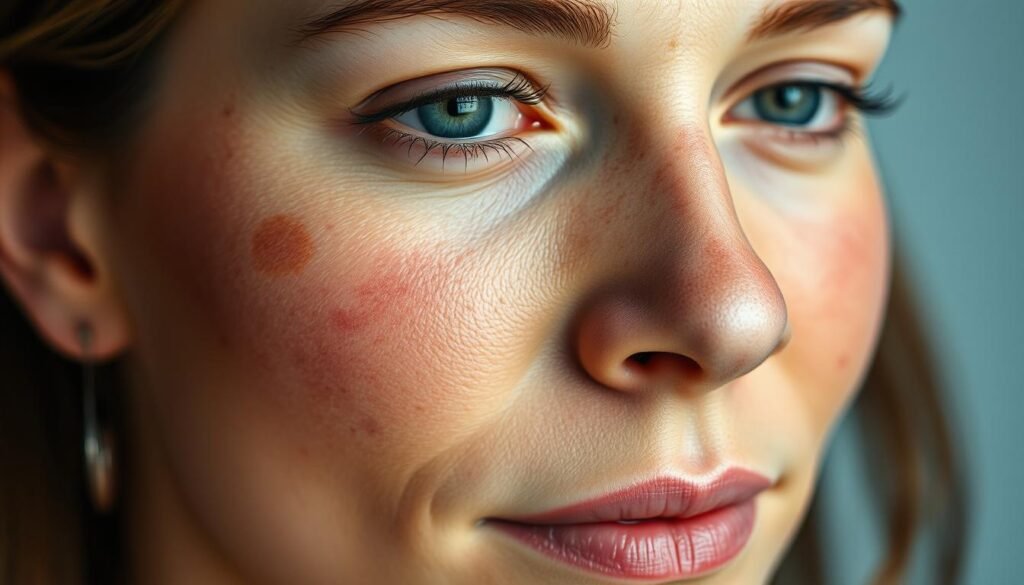
The main symptom of melasma is brown or grey patches that appear symmetrically. This condition is more common in women, especially during pregnancy. However, melasma can also occur in men because of other factors such as excessive sun exposure.
Definition and Symptoms of Melasma
Melasma is a skin condition characterised by dark patches caused by excessive melanin production. These patches usually don’t cause pain or itching, but they can affect your appearance. “This condition often makes people feel less confident,” says a skin expert.
Trigger Factors and the Role of Hormones
Several factors can trigger melasma, including sun exposure, hormonal changes and genetic factors. UV rays from the sun can stimulate melanin production, while hormonal changes, such as during pregnancy, can also be a main trigger.
“Using certain products that contain harsh chemicals can also make melasma worse.”
Understanding these factors is very important for choosing the right treatment. By knowing the cause, you can take useful steps to care for your skin and prevent the dark patches from getting worse.
Daily Skin Protection and Care
Keeping your facial skin healthy is an important step in preventing bothersome dark patches. With the right routine, you can protect your skin from triggers such as sunlight and irritation.
Preventing Sun Exposure and the Importance of Sunscreen
UV rays from the sun are one of the main triggers of dark patches. To protect your skin, use a sunscreen of at least SPF 30. Reapply every 2-3 hours, especially when you are outdoors.

Besides sunscreen, wear a wide-brimmed hat and sunglasses to reduce direct exposure. Avoid outdoor activities between 10 am and 4 pm, when the sun is most intense.
Gentle Care for Sensitive Skin
Sensitive skin needs special attention. Choose products with gentle ingredients that are free from alcohol or fragrance. “Products containing vitamin C or kojic acid can help brighten the skin without causing irritation,” advises a dermatologist.
Keep your skin moisturised by using a suitable moisturiser. Avoid procedures such as waxing that can cause irritation and worsen the skin condition.
| Product | Benefits | Recommendation |
|---|---|---|
| Sunscreen SPF 50+ | Protects against UVA/UVB rays | Reapply every 2-3 hours |
| Moisturiser with Vitamin C | Brightens and moisturises | Use morning and night |
| Gentle Cleanser | Cleanses without irritating | Use twice a day |
With the right routine, you can keep your skin tone even and prevent dark patches from appearing. Consult a doctor if needed to get recommendations for suitable medication or procedures.
Complete Guide: how to get rid of melasma
Having bright, even skin is many people’s dream, but dark patches such as spots can be a challenge. Fortunately, there are various methods you can try to deal with this condition, from natural ingredients to effective skincare products.
Natural Methods: Aloe Vera, Honey and Green Tea
Natural ingredients such as aloe vera, honey and green tea can be solutions for reducing dark spots on the skin. Aloe vera is known for its soothing and moisturising properties. Apply aloe vera gel directly to the affected area to help brighten the skin.
Honey has antibacterial and moisturising properties that are good for the skin. Mix honey with a little lemon to make a natural mask that can help reduce excess pigment. Green tea, rich in antioxidants, can also be used as a toner to soothe the skin and reduce inflammation.

Tips for Using Brightening Products with Active Ingredients
Brightening products containing active ingredients such as vitamin C, niacinamide and kojic acid are very effective for dealing with dark spots. Vitamin C helps brighten the skin and protects it from free radical damage. Niacinamide works to reduce hyperpigmentation and improve skin texture.
Kojic acid is known as a powerful ingredient for brightening the skin by reducing melanin production. Choose products that suit your skin type and use them regularly for maximum results.
Regular Care and Healthy Habits for Brighter Skin
Besides using products, daily habits also affect skin health. Use a sunscreen of at least SPF 30 every day to protect your skin from UV rays. Keep your skin moisturised with a moisturiser containing active ingredients such as hyaluronic acid.
If you are pregnant, choose safe products and avoid harsh chemicals. Consult a dermatologist to get the right recommendations for your skin condition.
| Product | Active Ingredient | Benefits |
|---|---|---|
| Vitamin C Serum | Vitamin C | Brightens and protects the skin |
| Niacinamide Moisturiser | Niacinamide | Reduces hyperpigmentation |
| Green Tea Toner | Green Tea Extract | Soothes and reduces inflammation |
With a combination of natural care and the right products, you can feel confident with bright, healthy skin. Don’t forget to always pay attention to your skin’s condition and adjust your care to your needs.
Medical Treatments and Professional Products for Brighter Skin
When dark patches on the face are hard to treat with home care, medical treatment can be an effective solution. Procedures such as laser, chemical peeling and microdermabrasion have been shown to give significant results in dealing with stubborn melasma. With the help of a dermatologist, you can choose the method that best suits your skin condition.
Laser, Chemical Peeling and Microdermabrasion Procedures
Laser treatments, such as Laser Pastelle, work by targeting excess melanin in the skin layers. This process helps reduce dark spots without damaging the surrounding tissue. “Laser treatment is very effective for facial melasma because it gives fast and long-lasting results,” explains a skin expert.
Chemical peeling uses certain acids to remove dead skin and stimulate the regeneration of new cells. This procedure can be done at various levels of intensity, depending on your skin condition. Microdermabrasion, on the other hand, uses a special device to exfoliate the outermost layer of skin, helping to reduce hyperpigmentation.
“Using sunscreen after medical treatment is very important to protect the skin from UV exposure and maintain the treatment results.”
Here is a comparison of several medical procedures you can consider:
| Procedure | How It Works | Benefits |
|---|---|---|
| Laser Treatment | Targets excess melanin | Fast, long-lasting results |
| Chemical Peeling | Removes dead skin | Stimulates cell regeneration |
| Microdermabrasion | Exfoliates the outermost layer of skin | Reduces hyperpigmentation |
Each procedure has its own advantages and risks. Consult a dermatologist to determine the best option. Don’t forget to always use a high-SPF sunscreen after treatment to protect your skin and maintain optimal results.
Conclusion
Keeping your skin healthy is the key to preventing dark patches that affect your appearance. Understanding the causes and symptoms of melasma is very important before choosing the right treatment. Both natural and medical methods play an important role in dealing with this condition.
If patches have already appeared in certain areas , consulting a dermatologist is highly recommended. They can provide the best solution for your skin condition. The role of melanin production and chemical factors should also be considered in skincare.
Always protect your skin from external triggers such as UV rays. Use a high-SPF sunscreen and keep a consistent skincare routine. This way, you can keep your skin healthy and bright.
FAQ
What is melasma and what are its symptoms?
Melasma is a skin condition characterised by brown or greyish patches, especially on the face. Symptoms include uneven changes in skin colour, especially on the cheeks, forehead and upper lip.
What factors trigger melasma?
Factors that trigger melasma include excessive sun exposure, hormonal changes (such as during pregnancy), using unsuitable skincare products and genetic factors. The hormone oestrogen also plays a role in increasing melanin production.
How can you prevent melasma caused by sun exposure?
You can prevent melasma by using a high-SPF sunscreen every day, avoiding direct sun exposure and wearing a hat or sunglasses when outdoors. Choose products containing zinc oxide or titanium dioxide for maximum protection.
Are there natural ingredients that can help reduce melasma?
Yes, some natural ingredients such as aloe vera, honey and green tea can help soothe the skin and reduce hyperpigmentation. Use them regularly as a mask or topical treatment for better results.
What medical treatments are effective for melasma?
Medical treatments such as laser, chemical peeling and microdermabrasion can help reduce melasma. These procedures are carried out by a dermatologist to remove dead skin cells and stimulate the regeneration of new skin.
How do you choose skincare products that are safe for melasma?
Choose products containing active ingredients such as vitamin C, niacinamide or kojic acid. Avoid products with harsh chemicals that can irritate the skin. Consult a dermatologist for the right recommendations.
Can melasma disappear completely?
Melasma can be managed with the right treatment, but it may not disappear completely. A combination of sun protection, regular care and medical procedures can help fade the patches and prevent them from coming back.