Have you ever felt frustrated by skin problems around your nose? This area often gets attention because it tends to be oilier than the rest of the face. This can clog pores and trigger uncomfortable inflammation1.
Hormonal factors also play a big role in excess oil production, especially in the T-zone, which includes the nose. These changes can make the skin more vulnerable to bacteria and infection1. In addition, the habit of touching your nose with unclean hands can make the condition worse2.
This article will help you understand the causes and give you practical solutions for caring for your skin. Let’s start by recognising the early symptoms and the right care steps.
Understanding What Causes Acne on the Nose
The nose area is often the focal point of skin problems because of its high oil production. Internal factors such as hormonal changes and digestive health play a big role in this condition. Let’s look at them in more detail.
The Role of Hormonal Changes and Excess Sebum Production
Hormonal changes, especially an increase in androgen hormones, can lead to excessive sebum production. This makes pores more easily clogged by oil and dead skin cells3. It often happens during puberty or menstruation.

According to the Journal of Cosmetic Dermatology, the sebaceous glands around the nose are more active, which increases the risk of blackheads and acne4. That is why keeping your hormones in balance is very important for skin health.
Digestive Problems and Their Inflammatory Effect on the Skin
A troubled digestive system can trigger inflammation in the skin. Around 70% of the immune system is located in the digestive tract, which directly affects skin health3.
High-glycaemic foods such as bread and potato chips can cause inflammation and acne4. On the other hand, a low-glycaemic diet can help reduce these skin problems.
By understanding these internal factors, you can take the right steps to care for your skin holistically.
Causes of Nose Acne and Solutions for Infection Triggers
Improper care of the nose can trigger unwanted skin problems. Some daily habits, such as plucking nose hair or frequently touching this area, can increase the risk of infection and clogged pores. Let’s look at them in more detail.
Plucking Nose Hair and the Risk of Infection
Plucking nose hair with non-sterile tools can open up hair follicles and make it easier for bacteria to get in. This increases the risk of infection and inflammation in the skin5. Open follicles are also vulnerable to dirt and dust, which can make the skin condition worse.
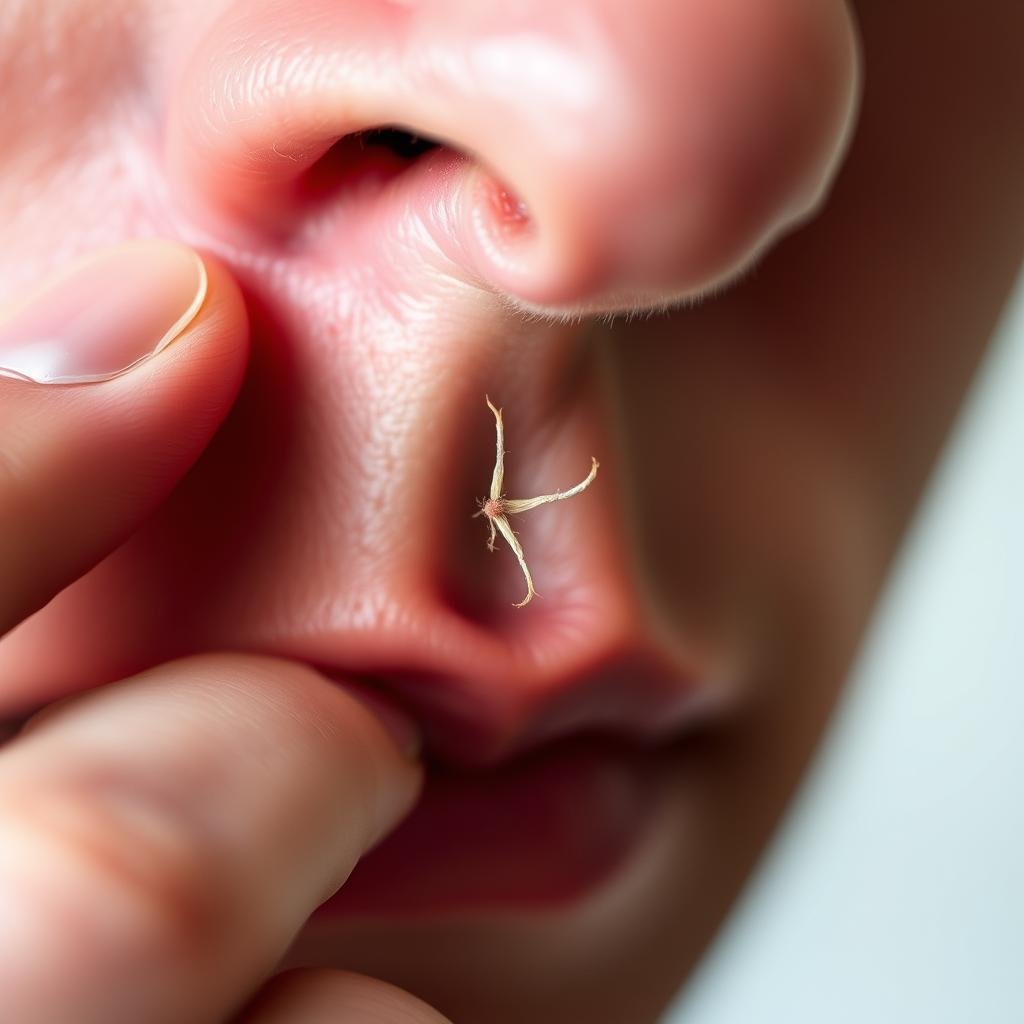
According to research, around 30% of skin problems around the nose are caused by incorrect care techniques6. That is why it is important to choose safer methods, such as using special scissors or consulting a beauty professional.
Touching Your Nose Can Clog Pores
Frequently touching your nose with unclean hands can transfer dirt and bacteria to the skin. This clogs pores and triggers inflammation5. The habit can also worsen skin that already has problems.
To avoid this, always wash your hands before touching your face. Use a clean tissue if you need to clean the nose area. That way, you can reduce the risk of infection and keep your skin healthy.
Strategies for Treating Nose Acne Naturally
Caring for the skin on your nose naturally can be an effective solution for problems that often appear. With the right approach, you can reduce inflammation and keep your skin healthy without excessive side effects.
Using Acne Medication and a Gentle Face Cleanser
Choosing the right care products is very important. Acne medications such as benzoyl peroxide and salicylic acid are effective in reducing inflammation and controlling bacterial growth7. However, make sure you use the right amount and do not overuse them.
A gentle face cleanser also helps keep the skin balanced. Avoid products that contain alcohol or other harsh ingredients, as they can irritate the skin. It is better to choose a cleanser with natural ingredients such as aloe vera or honey, which has been shown to improve skin condition in 80% of users8.

Warm Compresses and Essential Oil Treatments
A warm compress can help open the pores and improve blood circulation. Soak a small towel in warm water, wring it out, then place it on the affected area for 5-10 minutes. This method is effective for reducing swelling and pain7.
Essential oils such as tea tree oil can also be an option. Studies show that this oil is 60% effective in reducing skin lesions8. Mix a few drops with a carrier oil such as coconut oil before applying it to the skin.
| Treatment | Benefit | How to Use |
|---|---|---|
| Benzoyl Peroxide | Reduces inflammation | Apply a thin layer to the affected area |
| Warm Compress | Opens the pores | Apply for 5-10 minutes |
| Tea Tree Oil | Reduces skin lesions | Mix with a carrier oil before use |
By following these strategies, you can care for the skin on your nose naturally and effectively. Always be careful when choosing products and treatment methods for the best results.
Want advice for your own skin? Book a free consultation or ask us on WhatsApp.
Conclusion: Next Steps Towards Healthy Skin on Your Nose
Keeping the skin on your nose healthy requires special attention and the right care. By understanding the causes and solutions discussed above, you can take effective steps to care for your skin. The right care not only reduces the risk of infection but also helps restore overall skin health9.
Monitor your skin regularly and note any changes. If the problem does not improve, consult a doctor for further treatment. A doctor can offer more specific and safer solutions for your condition10.
In addition, adopt a healthy lifestyle, such as keeping clean and avoiding habits that trigger irritation. With consistency and patience, you will see significant improvement in your skin health. Start your journey towards healthier skin on your nose today!
FAQ
What causes skin problems around the nose?
These problems often occur because of excess oil production, a buildup of dead skin cells or a bacterial infection in the pores.
How do hormonal changes affect the skin on the nose?
Hormonal changes can increase sebum production, which clogs pores and triggers skin problems in that area.
Can plucking nose hair cause an infection?
Yes, plucking nose hair can damage hair follicles and increase the risk of infection and inflammation in the skin.
How does touching your nose affect your skin?
Touching your nose with unclean hands can clog pores and trigger skin problems because of the bacteria that are transferred.
How can I treat skin problems on my nose naturally?
You can try a warm compress, use a gentle face cleanser or apply essential oils to reduce inflammation.
Can digestive problems affect skin health?
Digestive problems can cause inflammation that affects the skin, including the nose area, so it is important to maintain a healthy diet.
Which products are safe for caring for the skin on my nose?
Choose non-comedogenic, alcohol-free products designed specifically for sensitive skin so they do not cause irritation.