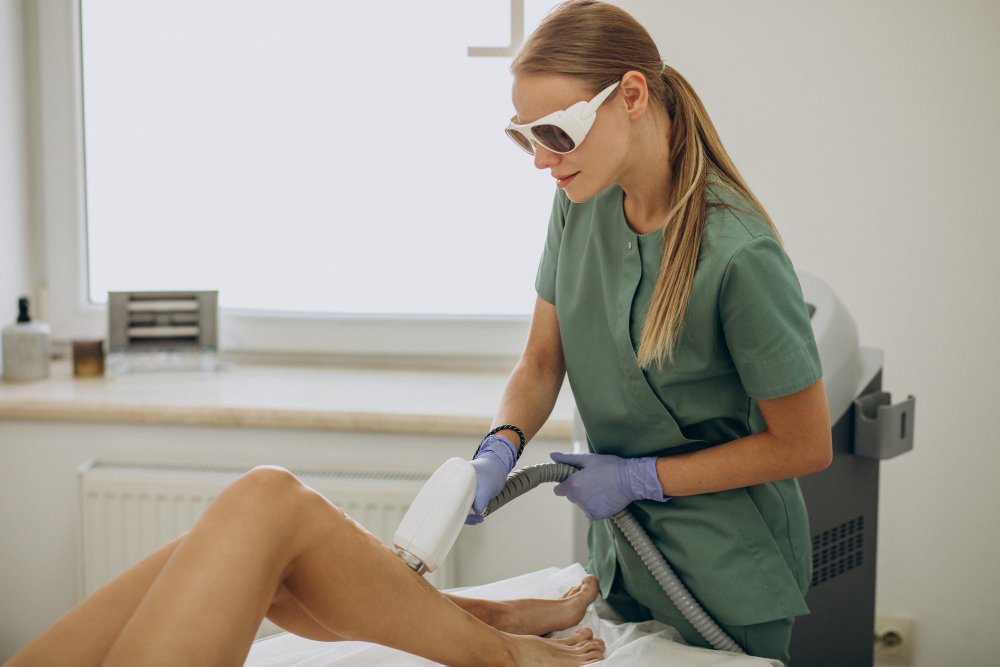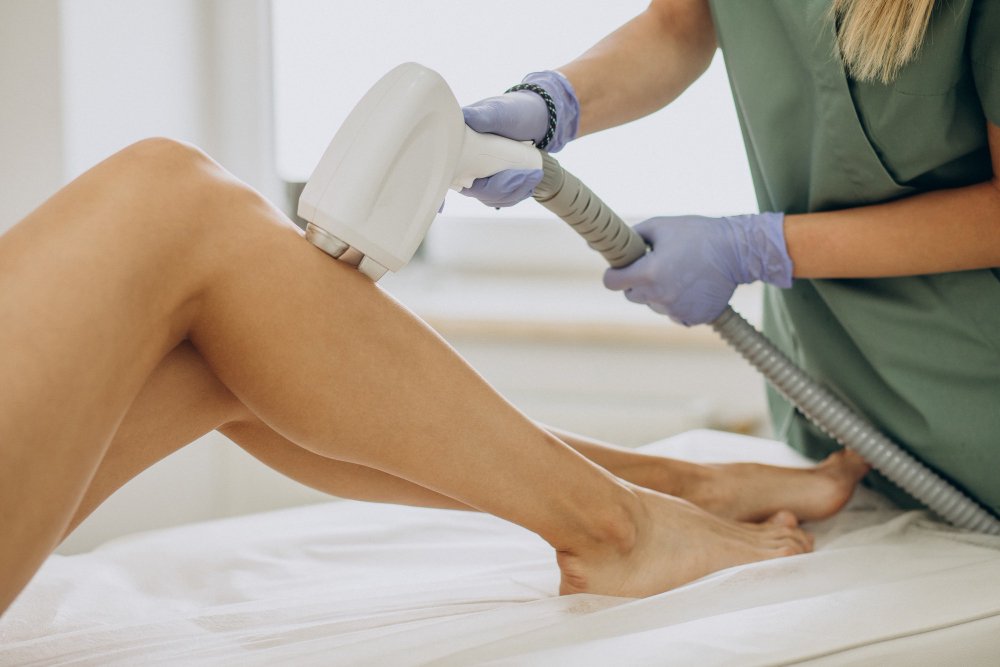

This is one of the most searched questions about laser hair removal, and most answers either oversimplify it or hedge so much that they are not actually useful. The honest answer is that it depends on several factors, and understanding those factors helps set realistic expectations before you start.
At De-Hair, most patients complete five to eight sessions and see an 80 to 95 percent permanent reduction. But the reason for that range, and the reasons why someone might fall at one end or the other, are worth explaining.
Daftar Isi
ToggleWhy Multiple Sessions Are Always Needed
Hair does not all grow at the same time. At any given moment, each hair on your body is at a different stage of its growth cycle. There are three main phases: anagen, which is the active growth phase; catagen, which is a transitional phase; and telogen, which is a resting phase where the hair is not actively growing and will eventually fall out.
Laser hair removal is most effective during the anagen phase, when the hair is actively growing and the connection between the hair shaft and the follicle is strong enough that the laser energy can travel down into the follicle and damage it. Hair in the catagen or telogen phase does not respond as well to treatment because that connection is weaker or absent.
Because only a proportion of hairs are in the anagen phase at any given time (typically 15 to 30 percent depending on the body area), a single session can only treat a fraction of the total follicles in the treatment area. Spreading sessions four to eight weeks apart allows each subsequent session to catch a new cohort of follicles in their active phase. Over five to eight sessions, most follicles have been treated at least once during anagen, which is why the permanent reduction after a full course is significant.
Factors That Affect How Many Sessions You Need
Body area is one of the main variables. Different areas of the body have different ratios of anagen to resting hairs at any given time. The face, for example, has a higher proportion of actively growing hairs at once, which sometimes means results come faster there. The legs have a lower anagen ratio, which can mean more sessions are needed to catch all the follicles.
Hair colour and coarseness also matter. Darker, coarser hair absorbs laser energy more readily than fine, light hair. People with very dark, dense hair often see faster results. People with fine hair or hair that is lighter in colour may need more sessions to achieve the same level of reduction, since the contrast between the hair pigment and the skin is smaller.
Skin tone affects calibration. At De-Hair, the ALMA Lasers Diode system is calibrated individually for each patient. For some skin tones, starting at slightly more conservative settings and increasing gradually produces better results overall and reduces any risk of adverse reactions. This approach may add a session to the total count in some cases but produces more consistent long-term outcomes.
Hormonal factors can also extend the number of sessions needed or cause some regrowth after treatment is complete. Areas that are influenced by hormonal activity, such as the face and bikini area in women, may respond more slowly or require occasional maintenance sessions after the initial course.
The Typical Progression at De-Hair
For most patients at De-Hair using the ALMA Lasers system, the progression looks roughly like this. After the first one or two sessions, hair starts coming back noticeably thinner and less dense. The skin begins to feel smoother between sessions. By sessions three through five, regrowth is sparse enough that many patients stop needing to shave between sessions. By sessions six through eight, most follicles have been permanently disabled and the treated area stays smooth with very little maintenance.
Sessions are spaced four to eight weeks apart. Going shorter than four weeks does not give enough time for the next cohort of hairs to enter their active phase. Going longer than eight weeks does not cause harm but extends the overall treatment timeline unnecessarily.
Comparing Laser to IPL on Session Count
One of the most significant practical differences between laser and IPL (Intense Pulsed Light) is the number of sessions required. IPL uses a broad spectrum of wavelengths at lower intensity, which means less energy reaches the follicle in each session. The result is that 20 to 40 sessions are typically needed to achieve results comparable to what laser achieves in five to eight.
The ALMA Diode Laser at De-Hair operates at a precise wavelength of 864 nm that targets the follicle specifically. The IN Motion protocol delivers energy gradually across the treatment area, and the integrated cooling keeps the skin surface comfortable. The precision of the system is why fewer sessions are needed and why the results are more consistent.
What Happens After the Course Is Complete
For most people, completing the recommended five to eight sessions produces permanent hair reduction that does not require ongoing treatment. The hair that occasionally comes back tends to be fine and light, and it grows slowly enough that it does not become a noticeable issue.
A small proportion of patients, particularly those with hormonal conditions like polycystic ovary syndrome, may experience more regrowth than average after the initial course. For these patients, occasional maintenance sessions, typically once or twice a year, can manage that regrowth. The De-Hair medical team will be able to advise on this based on your individual situation.
Getting an Accurate Estimate for Your Situation
The number of sessions you personally need depends on your hair type, skin tone, treatment area, and individual hair growth cycle. The most accurate estimate comes from a consultation with the medical team, who can assess all of these factors and give you a realistic picture of your treatment timeline. De-Hair offers free consultations at all eight of their Jakarta and Tangerang locations. You can book at de-hair.com/en/laser-hair-removal or reach them via WhatsApp.
Common Questions
What if I do not see results after my sessions?
If results after a full course are less than expected, the medical team will assess whether additional sessions, adjustments to the treatment parameters, or other factors need to be considered. Results with ALMA Lasers technology are consistent for the vast majority of patients, but individual variation does occur and the team will work with you to address it.
Does spacing sessions further apart change results?
Spacing beyond eight weeks does not improve results and simply extends the overall timeline. The four to eight week spacing is calibrated to align with hair growth cycles and should be followed as closely as practical.
Can I speed up the process by having sessions more frequently?
No. Having sessions more frequently than four weeks apart does not produce faster results because the hairs that need to be targeted have not yet entered their active growth phase. The cycle cannot be shortened.
Is maintenance needed forever after the course?
For most people, no. Hormonal factors can cause some regrowth for some patients, but the majority of people who complete a full course do not require ongoing regular maintenance sessions.