
Rejuran is an injectable treatment made from polynucleotides that stimulates collagen and elastin production in the dermis.
This treatment helps improve skin texture and enhances the healing process by increasing growth factors such as VEGF.
Post-procedure effects are generally mild. Symptoms include mild soreness, papules, redness, and bruising that gradually improve.
Recovery time is usually short; papules can settle within hours to a day, and bruises fade within 10-14 days.
Treatment is usually done in 3-4 sessions a few weeks apart. Early results such as improved texture and elasticity start to show after 2-4 weeks.
This article will help you understand what is normal, how to manage mild effects at home, and when you should return to the clinic for a consultation.
Key Takeaways
- Rejuran boosts collagen to improve skin texture.
- Post-procedure effects are usually mild and temporary.
- Manage symptoms at home, and consult the clinic if anything feels unusual.
- A course of 3-4 sessions gives gradual results over several weeks.
- Planning your treatment helps maximise results and comfort.
Understanding Rejuran and Why Downtime Happens
Rejuran is an injectable treatment that works in the dermal layer to stimulate regeneration. Its active ingredient comes from salmon DNA and acts as a natural mediator of tissue repair.
What is Rejuran and polynucleotide (PDRN) from salmon DNA
This product contains polynucleotides (PN/PDRN) that resemble fragments of human DNA. These fragments interact with target cells in the dermis to support barrier function and the structure of the skin layers.
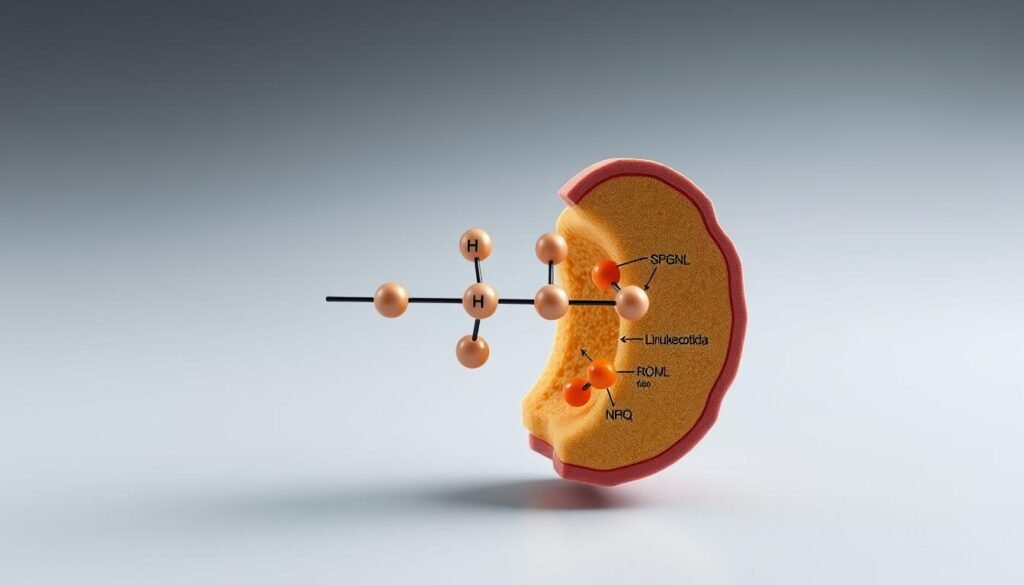
- Polynucleotides support wound healing and reduce inflammatory mediators.
- Because of these properties, the ingredient can improve skin texture and enhance skin tone.
- Clinical studies on the PN-HPT® formulation show a good safety profile at 6-month follow-up.
How Rejuran triggers collagen and elastin production
Polynucleotides stimulate fibroblasts, leading to increased collagen production and collagen and elastin. The result is a thicker dermis and better skin elasticity.
“This response helps smooth skin texture and reduce signs of ageing without an overfilled effect.”
Overall, this mechanism explains why mild reactions such as papules or swelling appear after injection. Rejuran Healer is popular because of its comprehensive regenerative effect.
Rejuran Downtime: Duration, Symptoms, and What It Feels Like
The post-injection experience differs for each person, but some common symptoms often appear. These reactions include mild soreness, swelling in the form of papules, redness, and bruising on the skin. Papules often feel like insect bites and usually settle within a few hours to 1 day.
Common symptoms
- Small papules and redness at the injection sites; makeup can be used after 24 hours.
- Bruising appears mainly in areas rich in blood vessels; the colour goes from dark purple to yellow as it fades.
- Pain is generally mild and reduces within 24-48 hours.
- The needle leaves temporary micro-wounds as part of the repair process.
Why everyone is different
The intensity and duration depend on the area of the face being treated and the injection technique. The microinjection technique creates many small points; other techniques may cause less swelling or bruising.
| Symptom | Typical duration | Notes |
|---|---|---|
| Papules / slight swelling | A few hours to 1 day | Makeup is fine after 24 hours |
| Redness | A few hours to 48 hours | Mild and normal |
| Bruising | 7-14 days | Colour changes from purple to yellow |
| Pain | 24-48 hours | Generally mild, monitor if it gets worse |
“With the right understanding, you can manage post-injection effects more calmly.”
Recovery Timeline: What You Need to Know Day by Day
Follow this day-by-day guide so you know what happens to your skin after treatment. This short guide helps set expectations and decide on the right simple steps.
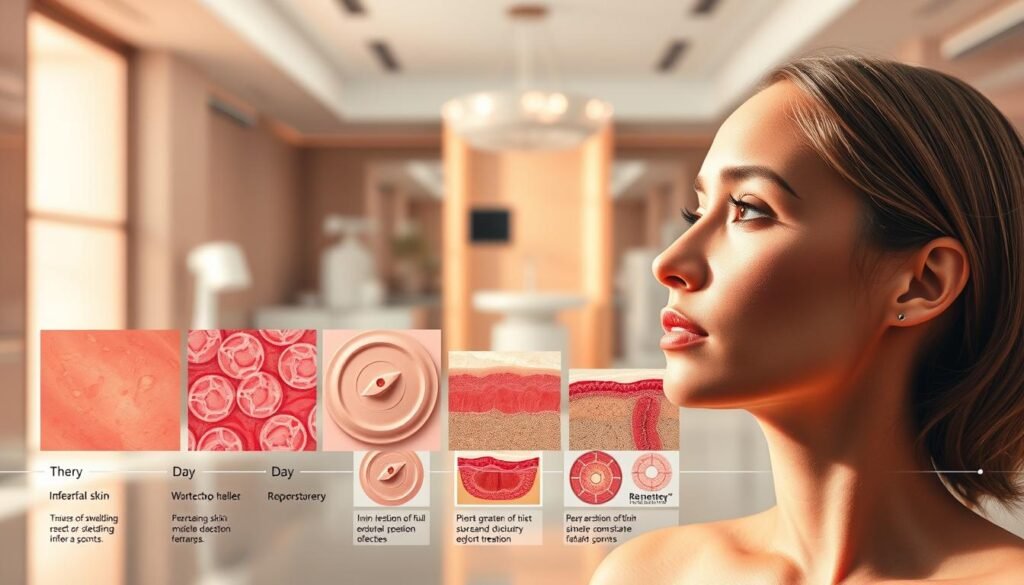
A few hours to 1 day
Within a few hours to 1 day, the small bumps on the skin start to go down. The product spreads through the dermis and the tissue responds to the healing process.
24-48 hours
At 24-48 hours, redness and swelling tend to decrease. You can usually wear light makeup; prioritise clean tools and gentle formulas.
The first week
In the first week, bruises change colour from dark purple to pale yellow. This colour change is normal, as part of the breakdown of haemoglobin in the tissue.
10-14 days
At 10-14 days, most signs have almost disappeared and normal activities feel comfortable again. Early results, such as skin that feels plumper and smoother, start to appear gradually.
- If this is your first time, document your daily progress with photos for evaluation.
- Enough sleep and good hydration speed up recovery.
- Avoid putting too much pressure on the treated area for a few days.
“Small daily care is often enough to speed up recovery and protect your treatment results.”
Practical Steps for Managing Downtime at Home
Simple steps can help ease mild reactions after treatment. Keep things clean to prevent infection and do not touch or squeeze the papules on your face.
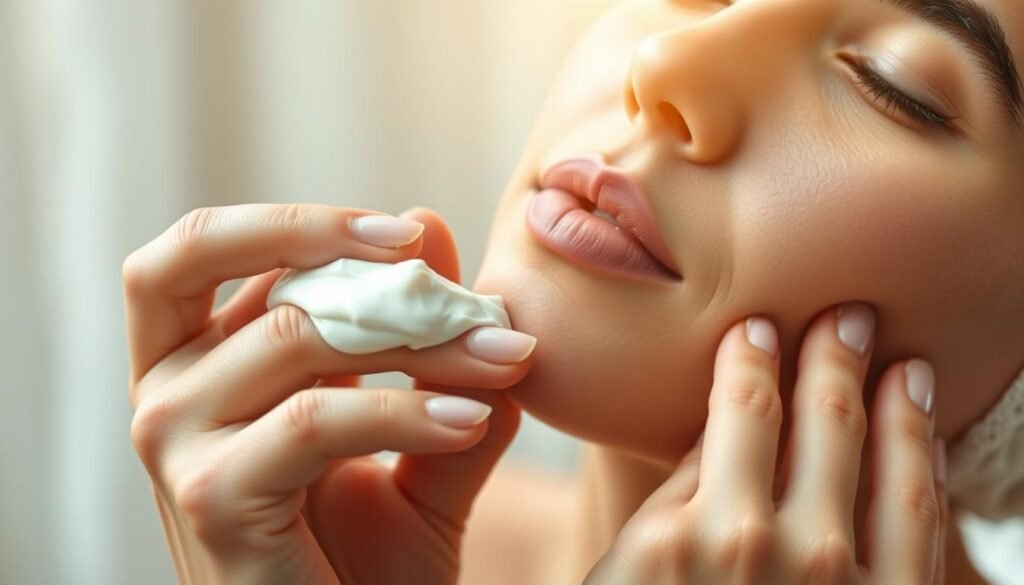
Keep it clean and do not touch the injection area
Wash your hands before touching the treated skin. Avoid squeezing so germs do not enter the needle holes and slow down healing.
Intermittent cooling, not direct ice packs
Use short cooling for a few minutes to reduce discomfort. Do not hold ice directly on the skin for too long, to avoid cold injury.
Gentle skincare: a more occlusive moisturiser and sunscreen
Choose gentle skincare products. Use a non-stripping cleanser and an occlusive moisturiser to protect the barrier.
Add a broad-spectrum sunscreen every morning to prevent irritation and protect sensitive areas.
Lifestyle: avoid heat, strenuous exercise, alcohol; get enough sleep
Avoid saunas, strenuous exercise, and alcohol for a few days to reduce swelling and redness. Enough rest and a diet rich in antioxidants support wound healing and regeneration.
- If you need makeup, choose a light formula and apply it with clean tools.
- Follow your doctor’s recommendations on safe products if you have sensitive skin.
How to Prevent Prolonged Downtime: Before, During, and After the Procedure
A thorough consultation and careful technique are key to safe and comfortable results. Choose a clinic with a proven track record and clear aftercare support.

A detailed consultation before the procedure
Discuss the areas to be injected, the amount of product, and your expected results. Mention any history of allergies, especially to fish-derived ingredients.
Injection technique and sterility during the procedure
Ask about the sterile protocol and the steps the doctor takes to minimise tissue trauma. The right technique reduces bruising and swelling on the skin.
“Confirm the medical team’s portfolio and access to aftercare check-ups before making a decision.”
| Step | When | Benefit |
|---|---|---|
| Choose a trusted clinic | Before treatment | Access to follow-up for quick handling of concerns |
| Complete consultation | Consultation day | Realistic goals and informed consent |
| Confirm sterile technique | During the procedure | Minimal risk of infection and side effects |
| Follow aftercare guidance | After the procedure | Speeds up skin recovery |
With good preparation and execution, every person can reduce the chance of prolonged side effects and enjoy their treatment results more safely.
Want advice for your own skin? Book a free consultation or ask us on WhatsApp.
Injection Techniques That Affect Downtime
The chosen injection technique strongly determines the initial response of the skin. This choice also affects comfort and how quickly mild signs settle.
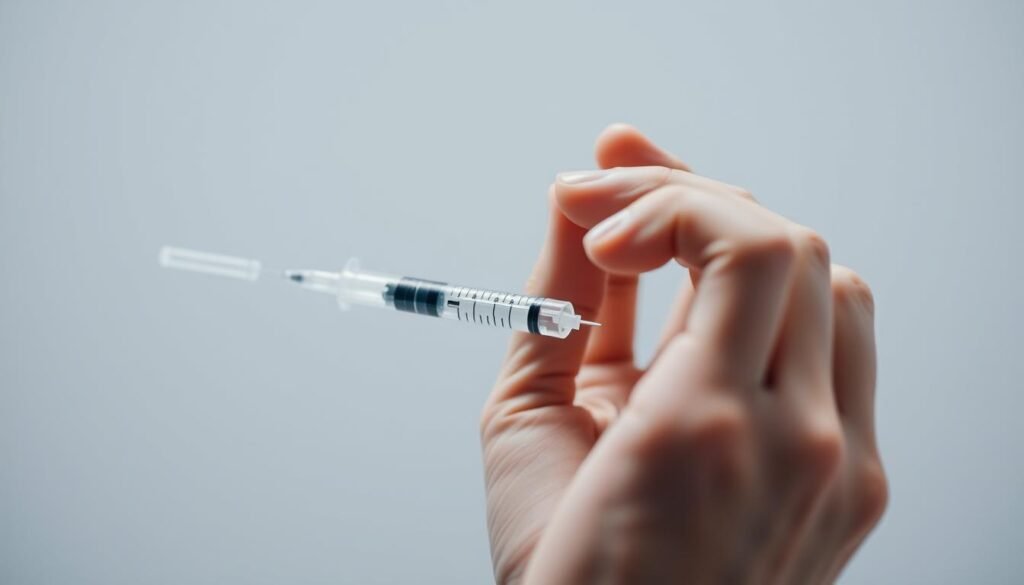
Microinjection (papule)
The microinjection technique places the product through many small points about 1 cm apart. Each injection creates a small bump, or papule, as a sign of distribution in the dermis.
Papules and redness usually disappear within 24-48 hours. This shows the product is spread evenly, even though it causes temporary effects.
Cannula: an option for sensitive areas
A cannula uses a long, blunt needle that requires fewer skin punctures. Because there are fewer punctures, the potential for bruising and swelling can also be lower.
This method is often chosen for areas such as under the eyes, the jawline, or the neck. The doctor decides on the procedure according to the anatomical map and clinical goals.
- Microinjection: even distribution, papules visible for 24-48 hours.
- Cannula: fewer punctures, reduced risk of bruising in some patients.
- Antiseptic protocols and gentle handling improve results and comfort.
| Method | Number of Punctures | Advantages |
|---|---|---|
| Microinjection | Many (points ~1 cm apart) | Even distribution, effective for large areas |
| Cannula | Fewer | Reduced risk of bruising, comfortable in sensitive areas |
| Choice of Technique | Depends on area & goal | A balance between effectiveness and recovery time |
“The doctor will choose the best technique based on the anatomy of the area and the clinical target.”
Rejuran Variants and How They Affect the Downtime Experience
Each product variant offers a different clinical focus. This choice determines comfort during injection and the target of skin improvement.
Rejuran Healer for all-round anti-ageing
Rejuran Healer is the main choice for rejuvenating the face and neck. Its formula works to improve skin quality from the dermal layer so texture and elasticity improve.
Rejuran I for thin areas such as under the eyes
Rejuran I has a lower PN concentration, so it is gentler on sensitive areas such as under the eyes. It reduces the risk of excessive reactions while still stimulating tissue repair.
Rejuran S for scars and pitted scars
The S variant is formulated to be more concentrated for scar and pitted scar indications. The more concentrated ingredient helps target thickened or irregularly structured tissue.
Rejuran HB with anaesthetic for comfort
Rejuran HB contains a local anaesthetic to reduce pain during injection.
This is useful for people with a low pain threshold or when the treated area is sensitive.
- The effect profile is similar across variants; pain and bruising depend on technique and skin characteristics.
- The choice of product should match the area, goals, and patient preferences.
- Discuss your priorities so the doctor can recommend the right variant.
“With the right product, treatment becomes more targeted and comfortable.”
Telling Downtime Apart from Side Effects: When to See a Doctor
Being able to recognise warning signs helps you act quickly if your skin condition gets worse. Some mild reactions are normal and will improve within a few days.
Allergy to fish-derived ingredients: who should avoid it
If you have a history of fish allergy, discuss it with your doctor before undergoing the procedure. Sensitivity to salmon DNA ingredients can trigger an allergic reaction.
The doctor may suggest an alternative or a small test if needed.
Signs of infection: worsening pain or swelling, consult promptly
Watch for increasing pain, growing swelling, spreading redness, or fever. These symptoms may signal infection and require an immediate consultation at the clinic.
The micro-wounds from injections usually heal quickly. However, if hygiene is not maintained, bacteria can enter and make things worse.
“Early consultation makes intervention easier so recovery stays smooth.”
- Distinguish mild papules and normal bruising from side effects that need evaluation.
- Record daily skin changes and bring photos when you see the doctor.
- Follow post-procedure instructions on cleansing and when it is safe to use makeup.
| Issue | Signs | Action |
|---|---|---|
| Normal reaction | Mild papules, bruising, redness that improves quickly | Home care, monitor for 24-72 hours |
| Allergic reaction | Severe itching, widespread swelling, hives | Stop the product, consult a doctor, consider an allergy test |
| Infection | Increasing pain, progressive swelling, fever | Visit the clinic for antibiotic treatment or intervention |
Session Plan, Results, and Comparison with Other Treatments
A structured treatment plan makes results more consistent and measurable. Programmes generally include three to four sessions two to four weeks apart, adjusted to the treated area and the skin’s response.
Number of sessions & intervals
The standard course is 3-4 sessions, 2-4 weeks apart. Clinics usually recommend an evaluation at each visit to adjust the injection volume (around 2-4 cc per session).
When results start to show
Early results appear after 2-4 weeks because of increased collagen production in the dermis. Changes in skin quality build over time and can be maintained with follow-up treatment every 6-12 months.
Quick comparison
| Treatment | Focus | Results & effects |
|---|---|---|
| Rejuran Healer | Regeneration through polynucleotides | Natural results, improved texture, mild downtime |
| Filler / Botulinum | Volume / muscle relaxation | Fast changes, a fuller or smoother look |
| Skin booster (hyaluronic acid) | Hydration and glow | Instant moisturising effect; a different focus from structural repair |
“Choose according to your goal: long-term regeneration of skin structure or instant volume correction.”
During your consultation, discuss your goals, budget, and complementary treatments so the session plan gives maximum results on the face and other areas.
Conclusion
In short, this injectable treatment offers long-term benefits even though there is a temporary response in the skin layers. ,
Mild reactions such as papules and swelling usually reduce within 24-48 hours, while bruises fade within 10-14 days. Improvements in texture and elasticity start to show after 2-4 weeks because polynucleotides stimulate cells to form collagen and elastin and support wound healing.
A course of 3-4 treatments a few weeks apart, together with consultation with a doctor at a clinic that meets proper standards, helps minimise side effects. With the right choice of product and technique, you can achieve natural results and better skin tone and facial texture over time.
FAQ
What is Rejuran and polynucleotide (PDRN) from salmon DNA?
Rejuran is an injectable therapy containing polynucleotides, or PDRN, extracted from salmon DNA. This ingredient is designed to stimulate skin tissue repair by enhancing cell regeneration and the natural wound healing process.
How does Rejuran trigger collagen and elastin production?
Once injected, PDRN works in the dermal layer to stimulate fibroblast cells. The fibroblasts then increase collagen and elastin production, so skin texture, elasticity, and skin tone tend to improve gradually.
What common symptoms are normal after the procedure?
Usual reactions include mild pain during and after injection, slight swelling, papules at the injection sites, redness, and bruising. These symptoms are generally temporary and improve within a few days to weeks.
Why does the experience differ between people, facial areas, and injection techniques?
Factors such as skin thickness, blood supply in certain areas, the doctor’s technique, and the amount and depth of injection affect the response. For example, the under-eye area is more sensitive than the cheeks, and the cannula technique usually causes less bruising than a small needle.
How long do the small bumps (papules) usually last?
Papules generally start to settle within a few hours to 1 day. In many patients, the skin surface is smoother again within 24-48 hours, although bruising may remain visible for longer.
When can I wear makeup after treatment?
Light makeup is usually allowed after 24-48 hours if there are no signs of infection and the skin feels comfortable. Make sure the products you use are gentle and do not irritate the injection sites.
How does the colour of a bruise change in the first week?
Bruises often change colour from red/purple to brown and then yellow over several days to weeks. This is a normal part of the healing process and they tend to fade by the second week.
What practical steps can I take at home to speed up healing?
Keep the area clean, do not touch or rub the skin, use intermittent cooling (avoid holding ice directly for long), use an occlusive moisturiser and sunscreen, and avoid excessive heat, strenuous exercise, and alcohol for a few days.
What should be done before and during the procedure to reduce the risk of complications?
A detailed consultation with the doctor is important: discuss the treatment areas, dosage, allergy history, medication you take, and expected results. Make sure the clinic applies proper sterility standards and injection techniques.
Which injection techniques affect the level of bruising and discomfort?
Microinjection (many points/papules) usually leaves papules that disappear within 24-48 hours. The cannula technique needs fewer punctures, so the risk of bruising and tissue trauma tends to be lower.
How do the product variants differ for different results?
There are specially formulated variants, for example for all-round anti-ageing, thin areas such as under the eyes, or for treating scars and pitted scars. Some formulas also contain a local anaesthetic for comfort during injection.
Who is at risk of allergy to salmon DNA ingredients and should avoid the treatment?
People with a history of allergy to fish-based products or unexplained allergic reactions should consult first. The doctor will assess the medical history and carry out a sensitivity test if needed before the procedure.
What signs of infection after injection should make me see a doctor immediately?
Watch for worsening pain, swelling that keeps increasing, fever, pus, or spreading redness. These symptoms may indicate infection and require prompt medical evaluation.
How many sessions are recommended and how far apart?
A typical plan often includes 3-4 sessions 2-4 weeks apart. The number can be adjusted to your skin condition and treatment goals.
When are skin improvements usually visible?
Early improvement can be seen within 2-4 weeks as collagen production increases. More noticeable results usually appear gradually in the weeks after the course of treatment.
How does it compare with filler, botox, or hyaluronic acid skin boosters?
This therapy tends to give more natural results through improved texture and elasticity because it triggers collagen production. Compared with filler or botox, its effect focuses more on long-term regeneration, with relatively mild downtime.